Who created this, how it was made and why it exists
- Who
- Published under the organizational identity Pergola Wiki Editorial Team; neither AI nor the organization is presented as a named professional individual.
- How
- AI assistance was used for drafting, translation, source-metadata organization, static-site coding and automated QA in a publisher-directed workflow. Automated checks do not establish technical correctness.
- Why
- To provide free bilingual educational synthesis; one disclosed Oscar Pergola industry link does not determine conclusions, source tiers or rankings.
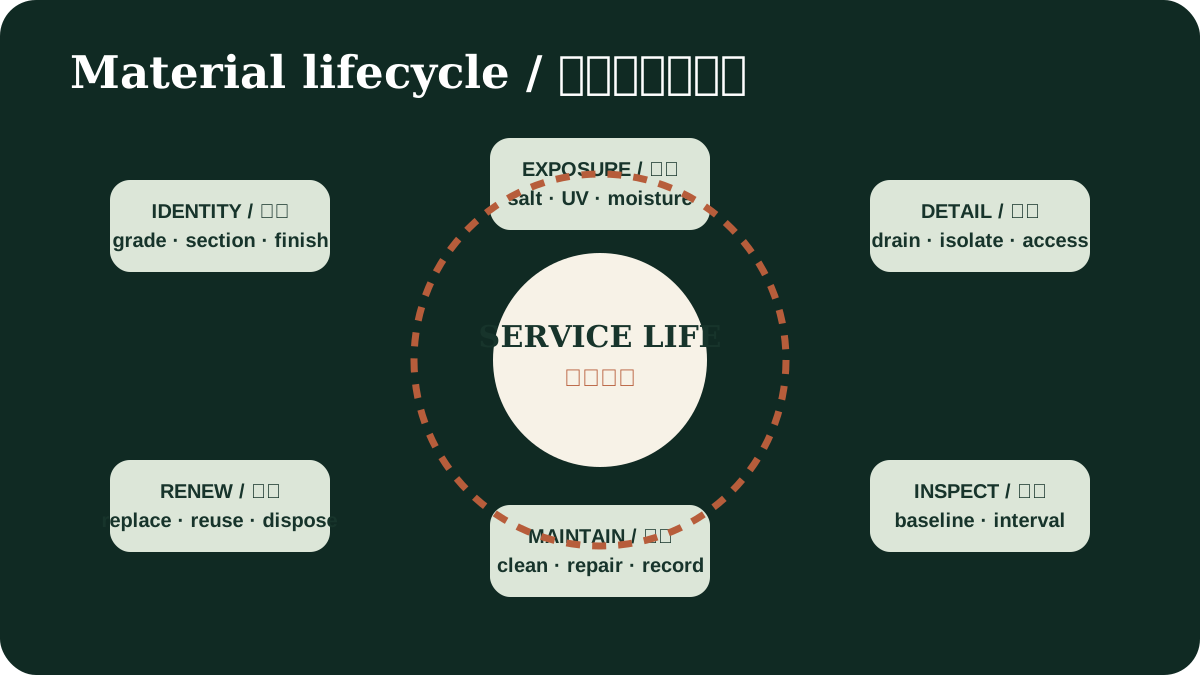
Read a detailed text description
The maintenance loop connects known material and exposure conditions with inspection intervals, recorded findings, cleaning or repair and eventual renewal. Each completed record informs the next inspection, helping recurrent drainage, coating, fastener or movement problems become visible over time.
Key takeaways
- Record the symptom before changing or hiding it.View claim record ·
PWC-TROUBLESHOOTING-COMMON-FAILURES-1 - Repeated leaks, movement or motor trips usually require cause diagnosis—not more sealant or force.View claim record ·
PWC-TROUBLESHOOTING-COMMON-FAILURES-2 - Deformation, loose anchors, cracking, electrical water entry or unsafe movement are stop-use conditions.View claim record ·
PWC-TROUBLESHOOTING-COMMON-FAILURES-3
The claim register connects stable IDs, article locations and article-level associated sources; it is not an external fact-check of each statement.
On this page
Capture a reliable baseline
Photograph the whole bay and close details with a scale, date and weather context. Record whether the symptom occurs during rain, wind, temperature change, operation or after a modification. Compare post plumb, diagonals, roof falls, joint gaps and controller settings with handover records. A single close-up without location or scale can make later diagnosis harder.
Leaks and overflow
First identify whether water crosses the roof surface, a wall interface, a joint, a gutter or an outlet. Check level, debris, seals, outlet capacity, overflow and final discharge. Water appearing after rain stops can come from retained water rather than the visible joint. Do not seal an overflow opening or trap water inside a member to stop a drip.
Official abstract establishing a lifecycle framework from briefing and design through maintenance, replacement, reuse and disposal.
Movement, racking and unusual noise
New gaps, rubbing blades, out-of-square bays, loose screens or clicking connections can indicate foundation movement, connection slip, thermal restraint or operational misalignment. Stop using moving components if they bind or can fall. Do not repeatedly tighten or pack a joint without identifying why it moved and whether the load path changed.
Motor, sensor and control faults
Record the error, operating position, weather, affected bay and whether manual override works. Check only user-serviceable obstructions and isolation steps described by the manufacturer. Repeated trips, unsynchronized bays, damaged cables, water entry or failed limits require qualified service. Bypassing a sensor can remove a warning without removing the hazard.
Government technical reference on wood properties, moisture, decay, fasteners and design.
Corrosion, timber decay and finish failure
Staining, blistering, softness, fungal growth, split edges and elongated holes should be exposed and mapped. Distinguish surface appearance from measurable section or connection damage, but do not hide either beneath cover plates or fresh coating. Find the moisture, salt, incompatible-metal or detailing cause before repair.
Escalation and closeout
Stop normal use for visible deformation, cracking foundations, loose anchors, unstable parts, electrical water entry, falling components or unsafe motion. Preserve failed parts and records. A closeout should state the diagnosed cause, repair scope, responsible person, tests performed, remaining limitations and the next inspection date—not only that the symptom disappeared.
Official abstract for corrosivity categories affecting steel coating selection.
Evidence check before acting
This article provides general educational synthesis; these three checks turn reading into project-specific verification work.
| Confirm | Stronger evidence to retain | What this article cannot establish |
|---|---|---|
| Installed model, environment, service history, current condition and safe access | Manufacturer instructions, dated logs, photographs and competent inspection where risk warrants | A calendar interval or warranty period does not establish present condition or remaining life. |
Registered cited sources and scope
Official abstract establishing a lifecycle framework from briefing and design through maintenance, replacement, reuse and disposal.
Government technical reference on wood properties, moisture, decay, fasteners and design.
Official abstract for corrosivity categories affecting steel coating selection.
Official standard hub for US structural actions including wind, snow, rain, seismic and load combinations.
Cite this page
Pergola Wiki Editorial Team. “Pergola troubleshooting and warning signs.” Pergola Wiki. Content version 1.7; editorially reviewed 25 Jul 2026. https://pergola.wiki/articles/troubleshooting-common-failures/