Who created this, how it was made and why it exists
- Who
- Published under the organizational identity Pergola Wiki Editorial Team; neither AI nor the organization is presented as a named professional individual.
- How
- AI assistance was used for drafting, translation, source-metadata organization, static-site coding and automated QA in a publisher-directed workflow. Automated checks do not establish technical correctness.
- Why
- To provide free bilingual educational synthesis; one disclosed Oscar Pergola industry link does not determine conclusions, source tiers or rankings.
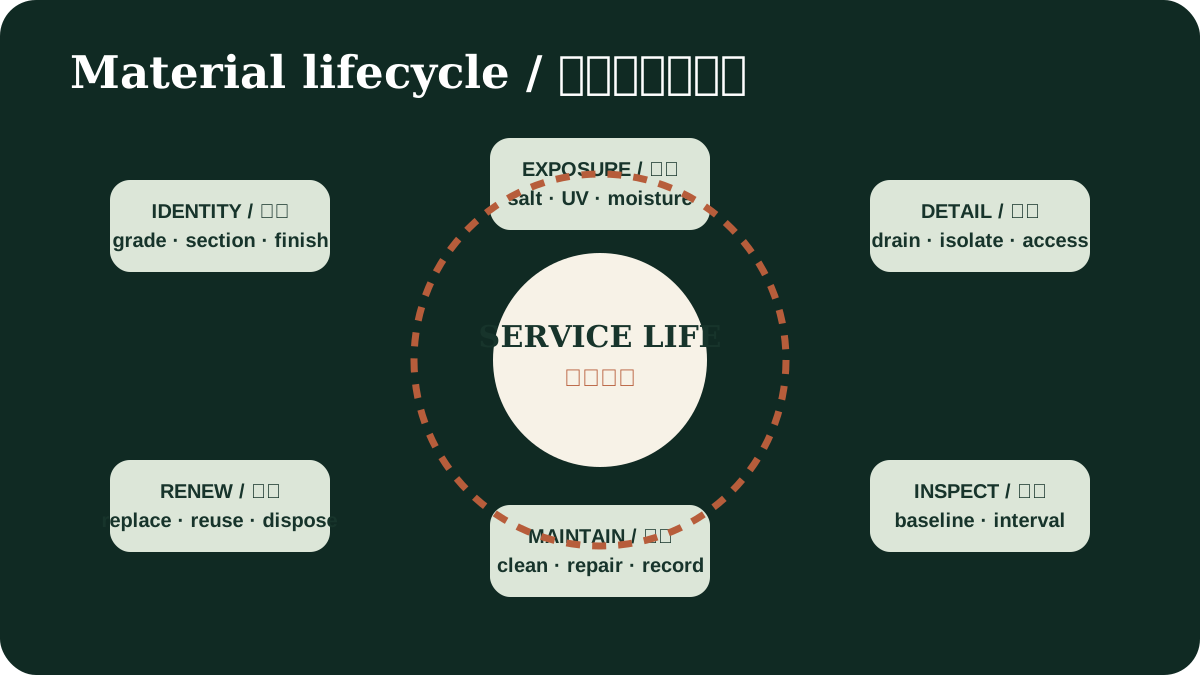
Read a detailed text description
The maintenance loop connects known material and exposure conditions with inspection intervals, recorded findings, cleaning or repair and eventual renewal. Each completed record informs the next inspection, helping recurrent drainage, coating, fastener or movement problems become visible over time.
Key takeaways
- Plan component cycles separately.View claim record ·
PWC-SERVICE-LIFE-PLANNING-1 - Access and records are design features.View claim record ·
PWC-SERVICE-LIFE-PLANNING-2 - Observed performance should update the plan.View claim record ·
PWC-SERVICE-LIFE-PLANNING-3
The claim register connects stable IDs, article locations and article-level associated sources; it is not an external fact-check of each statement.
On this page
Build a component register
List structure, finishes, fasteners, seals, fabric, motors, controls, sensors, gutters, outlets, glazing and foundations. For each item record environment, expected function, inspection method, maintenance action, access requirement, replaceability and the evidence behind any service-life assumption.
Use condition triggers, not dates alone
Calendar intervals establish routine attention, but action should respond to coating breakdown, corrosion, cracking, looseness, leakage, changed motor current, blocked outlets or foundation movement. Severe weather, impact, building alteration and long shutdowns trigger additional inspection.
Official abstract establishing a lifecycle framework from briefing and design through maintenance, replacement, reuse and disposal.
Design for maintainability
Provide safe access to drains, controllers, fasteners and replaceable seals without dismantling primary structure. Avoid concealed consumables behind permanent finishes. A durable material with inaccessible failure points can create a shorter practical service life than a maintainable system with replaceable parts.
Keep a feedback record
Date-stamped photographs, measurements, test results, repairs and replacement parts allow trends to be seen. When one component fails early, update the environment or interval assumptions for similar locations. Service-life planning is a managed process, not a promise of a fixed number of years.
Official abstract for corrosivity categories affecting steel coating selection.
Turn records and failures into a feedback system
Give every maintainable component an identifier, location, function, environment, inspection method, access method, action threshold and record field. Link photographs and replacement parts to that identifier so condition can be compared over time. When a component fails, record the mechanism, contributing environment, affected locations, temporary control, repair, verification and next review. Do not merely reset the calendar after replacement: revise intervals and details for comparable locations. A useful service-life plan becomes more site-specific as evidence accumulates.
Component lifecycle register
Manage component cycles instead of one life number.
| Checkpoint | Define | Retain |
|---|---|---|
| Structure | Movement and damage | Baseline evidence |
| Water | Gutters, seals, outlets | Flow/cleaning records |
| Finish | Coating and corrosion | Condition map |
| Controls | Motors, sensors, override | Settings and faults |
Evidence check before acting
This article provides general educational synthesis; these three checks turn reading into project-specific verification work.
| Confirm | Stronger evidence to retain | What this article cannot establish |
|---|---|---|
| Installed model, environment, service history, current condition and safe access | Manufacturer instructions, dated logs, photographs and competent inspection where risk warrants | A calendar interval or warranty period does not establish present condition or remaining life. |
Registered cited sources and scope
Official abstract establishing a lifecycle framework from briefing and design through maintenance, replacement, reuse and disposal.
Official abstract for corrosivity categories affecting steel coating selection.
Government technical reference on wood properties, moisture, decay, fasteners and design.
European framework covering resistance, serviceability, durability and fire resistance of structural aluminium.
Cite this page
Pergola Wiki Editorial Team. “Service-life and maintenance planning.” Pergola Wiki. Content version 1.7; editorially reviewed 25 Jul 2026. https://pergola.wiki/articles/service-life-planning/