Who created this, how it was made and why it exists
- Who
- Published under the organizational identity Pergola Wiki Editorial Team; neither AI nor the organization is presented as a named professional individual.
- How
- AI assistance was used for drafting, translation, source-metadata organization, static-site coding and automated QA in a publisher-directed workflow. Automated checks do not establish technical correctness.
- Why
- To provide free bilingual educational synthesis; one disclosed Oscar Pergola industry link does not determine conclusions, source tiers or rankings.
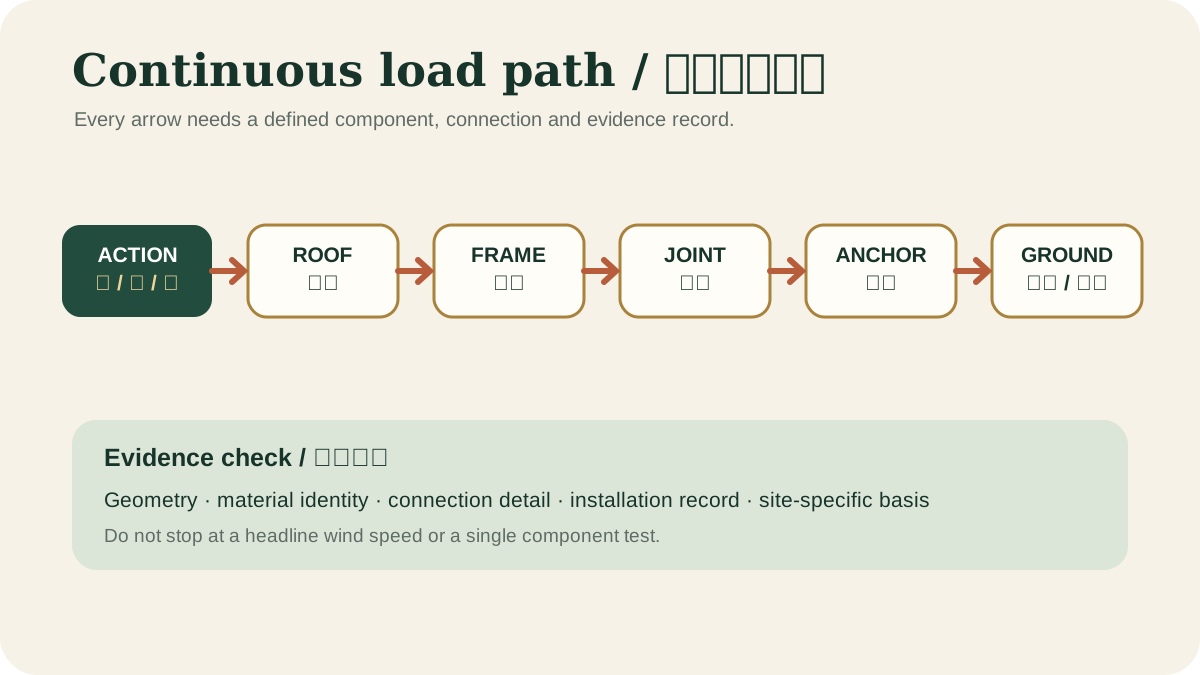
Read a detailed text description
The diagram follows gravity, wind uplift and lateral actions from the roof surface into rafters or louvers, beams and posts. It continues through every connection, base plate and anchor into the foundation and finally the supporting soil, emphasizing that one weak or undocumented link interrupts the claimed structural path.
Key takeaways
- Material labels alone do not define durability.View claim record ·
PWC-COASTAL-CORROSION-1 - Crevices and trapped water are high-risk locations.View claim record ·
PWC-COASTAL-CORROSION-2 - Inspection and washing plans should match exposure.View claim record ·
PWC-COASTAL-CORROSION-3
The claim register connects stable IDs, article locations and article-level associated sources; it is not an external fact-check of each statement.
On this page
Exposure assessment
Distance from salt water is only one factor. Prevailing wind, shelter, time of wetness, industrial contaminants and direct splash influence the local micro-environment.
Detailing and care
Specify compatible fasteners, isolate dissimilar metals, drain hollow sections, seal vulnerable cuts where required, and make joints inspectable. Maintenance guidance should avoid aggressive cleaners that damage finishes.
Official abstract for corrosivity categories affecting steel coating selection.
Micro-environments matter
Distance from the coast is only one indicator. Salt spray, prevailing wind, shelter, condensation, irrigation, pool chemicals, trapped debris and dissimilar-metal contact create local exposure. A protected-looking crevice can be more aggressive than a washed open face. Specify materials and maintenance for the actual detail, not only a regional label.
Plan inspection and replaceable interfaces
Make fasteners, base plates, drains and electrical enclosures inspectable. Use compatible, documented repair coatings and replace sacrificial or consumable parts before corrosion expands into structural material. Washing intervals should reflect salt deposition and water quality; aggressive cleaning can damage coatings and push contaminants into joints.
Official directory for aluminum standards, alloy data and errata.
Evidence check before acting
This article provides general educational synthesis; these three checks turn reading into project-specific verification work.
| Confirm | Stronger evidence to retain | What this article cannot establish |
|---|---|---|
| Site actions, continuous load path, foundations, connections and supporting structure | Project-specific site data, calculations, approved drawings and inspection records | A general table, calculator or article is not a project design or approval. |
Registered cited sources and scope
Official abstract for corrosivity categories affecting steel coating selection.
Official directory for aluminum standards, alloy data and errata.
Residential coastal construction guidance addressing high winds, flooding, erosion, corrosion-sensitive detailing and other hazards.
Cite this page
Pergola Wiki Editorial Team. “Coastal and corrosive environments.” Pergola Wiki. Content version 1.7; editorially reviewed 25 Jul 2026. https://pergola.wiki/articles/coastal-corrosion/