Who created this, how it was made and why it exists
- Who
- Published under the organizational identity Pergola Wiki Editorial Team; neither AI nor the organization is presented as a named professional individual.
- How
- AI assistance was used for drafting, translation, source-metadata organization, static-site coding and automated QA in a publisher-directed workflow. Automated checks do not establish technical correctness.
- Why
- To provide free bilingual educational synthesis; one disclosed Oscar Pergola industry link does not determine conclusions, source tiers or rankings.
Read a detailed text description
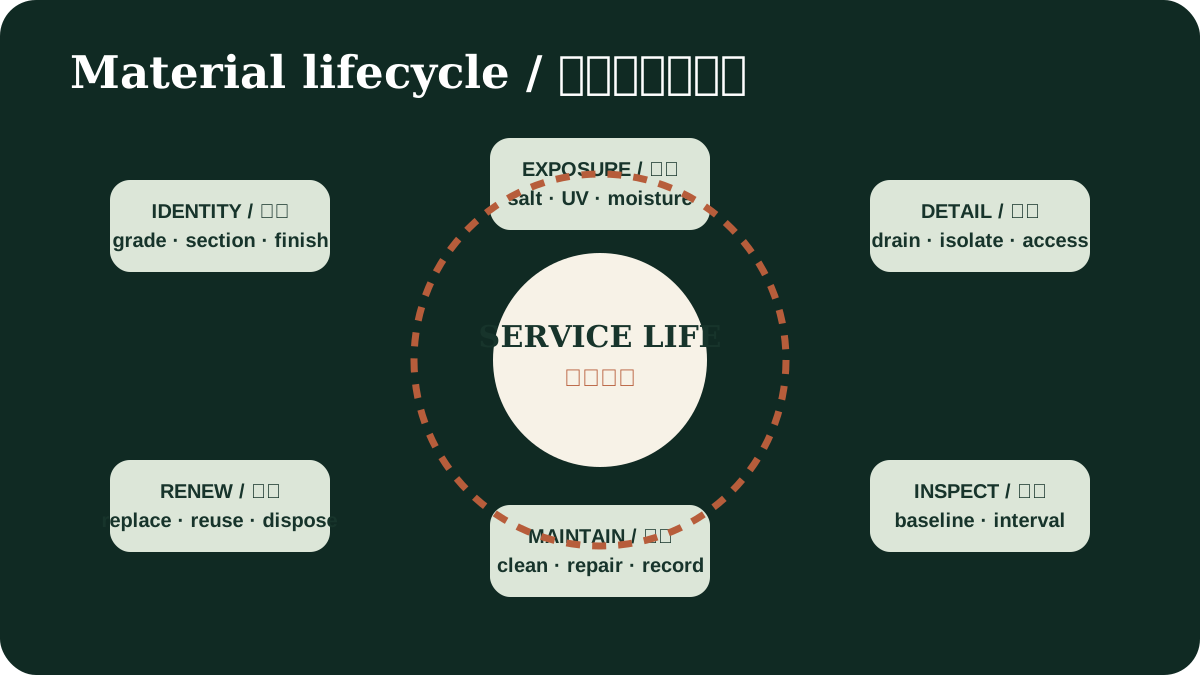
The circular sequence begins with verified material identity and environmental exposure, then passes through protective detailing, inspection and maintenance before renewal or replacement feeds back into the next cycle. The loop shows that durability depends on traceable specification, compatible connections, drainage and recorded care rather than the material name alone.
Key takeaways
- Structural grade matters.View claim record ·
PWC-TIMBER-1 - Keep end grain and post bases away from persistent moisture.View claim record ·
PWC-TIMBER-2 - Finish does not replace decay-resistant detailing.View claim record ·
PWC-TIMBER-3
The claim register connects stable IDs, article locations and article-level associated sources; it is not an external fact-check of each statement.
On this page
Material variability
Wood properties vary by species, grade, growth characteristics and moisture condition. Structural member sizing and connections should follow the locally adopted wood standard and actual grade marks.
Durability by design
Provide drainage, ventilation, protected end grain and inspectable connections. Ground contact, trapped water and unsealed cuts increase decay risk. Coatings slow weathering but require renewal and cannot rescue poor geometry.
Government technical reference on wood properties, moisture, decay, fasteners and design.
Moisture detailing governs durability
Species and preservative treatment matter, but geometry often decides whether timber stays dry enough to perform. End grain, horizontal checks, concealed post bases and interfaces beneath metal caps need drainage and ventilation. Keep soil, irrigation and leaf litter away from structural timber and make high-risk faces visible for inspection.
Movement is normal; loss of section is not
Seasonal checking and dimension change can be expected, while softness, fungal fruiting, persistent high moisture, crushing at bolts or a loose post base require investigation. Fasteners should accommodate timber movement without allowing water traps. Recoating a wet or decayed surface does not restore structural section.
ANSI-approved wood design standard referenced by 2024 US model codes.
Evidence check before acting
This article provides general educational synthesis; these three checks turn reading into project-specific verification work.
| Confirm | Stronger evidence to retain | What this article cannot establish |
|---|---|---|
| Specified grade, finish system, exposure and compatible fasteners | Product traceability, mill or treatment records, finish data and project warranty terms | A generic material label does not establish grade, durability or suitability for the exposure. |
Registered cited sources and scope
Government technical reference on wood properties, moisture, decay, fasteners and design.
ANSI-approved wood design standard referenced by 2024 US model codes.
Expert-prepared implementation material for Eurocode 5 timber design, hosted by the European Commission JRC.
Cite this page
Pergola Wiki Editorial Team. “Timber and wood pergolas.” Pergola Wiki. Content version 1.7; editorially reviewed 25 Jul 2026. https://pergola.wiki/articles/timber/