Who created this, how it was made and why it exists
- Who
- Published under the organizational identity Pergola Wiki Editorial Team; neither AI nor the organization is presented as a named professional individual.
- How
- AI assistance was used for drafting, translation, source-metadata organization, static-site coding and automated QA in a publisher-directed workflow. Automated checks do not establish technical correctness.
- Why
- To provide free bilingual educational synthesis; one disclosed Oscar Pergola industry link does not determine conclusions, source tiers or rankings.
Read a detailed text description
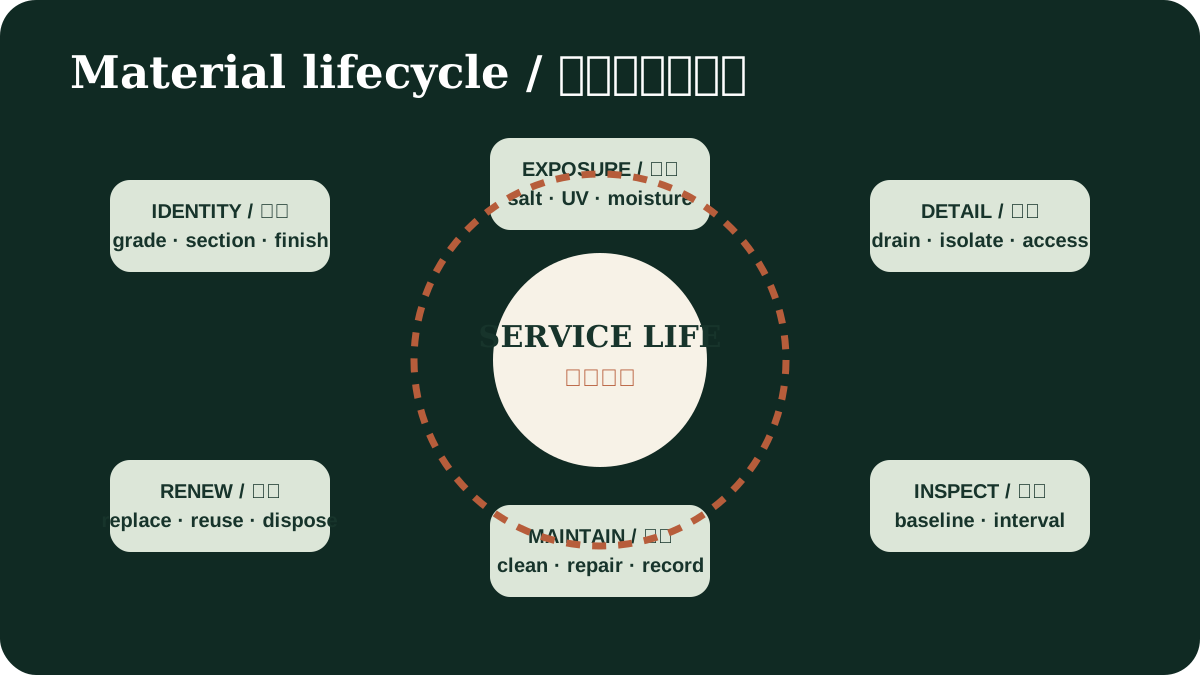
The maintenance loop connects known material and exposure conditions with inspection intervals, recorded findings, cleaning or repair and eventual renewal. Each completed record informs the next inspection, helping recurrent drainage, coating, fastener or movement problems become visible over time.
Key takeaways
- An open pergola, pavilion or rain shelter is not a lightning-safe location; move occupants to a substantial enclosed building or other officially identified safe shelter.View claim record ·
PWC-SEVERE-WEATHER-OPERATION-AND-EMERGENCY-PLANNING-1 - Operable roofs, screens and retractable elements need documented permitted states and trigger conditions for each hazard.View claim record ·
PWC-SEVERE-WEATHER-OPERATION-AND-EMERGENCY-PLANNING-2 - Post-event reopening should follow inspection and evidence—not appearance alone or a reset of the controls.View claim record ·
PWC-SEVERE-WEATHER-OPERATION-AND-EMERGENCY-PLANNING-3
The claim register connects stable IDs, article locations and article-level associated sources; it is not an external fact-check of each statement.
On this page
Build a hazard-specific operating plan
List the relevant hazards for the site: forecast wind, thunderstorms, hail, heavy rain, snow or ice, heat and coastal flooding. For each one, record who monitors warnings, which operating state is permitted, when the space closes, where occupants go and who authorizes reopening. One generic “bad weather” instruction is too vague.
Do not use an open pergola as lightning shelter
The U.S. National Weather Service directs people who hear thunder to move immediately to a substantial enclosed building with electricity or plumbing, or an enclosed metal-topped vehicle with windows up. Open shelters and structures with exposed sides are not safe lightning refuge. Route occupants away before the storm reaches the site.
Official lightning guidance identifying substantial enclosed buildings and closed metal-topped vehicles as safe shelter—not open outdoor structures.
Define equipment states before the event
Obtain project-specific instructions for louvers, retractable fabrics, drop screens, heaters, lighting, fans and loose furnishings. A state that sheds rain may not be the state permitted for high wind or snow. Record automatic sensor behavior, power-loss position, manual override and the conditions that require isolation rather than continued operation.
Prepare the site and drainage
Before a forecast event, clear safe-to-access outlets, secure or remove loose items, confirm overflow paths and close the area before work becomes hazardous. Do not climb onto wet or wind-exposed roofs for last-minute cleaning. Coordinate snow, ice and ponding response with the project design rather than improvising removal loads.
Official standard hub for US structural actions including wind, snow, rain, seismic and load combinations.
Inspect before reopening
After the event, check movement, deformation, anchors, connections, blade alignment, seals, gutters, outlets, wiring, sensors and surrounding ground. Escalate cracking, loose anchors, persistent ponding, electrical water entry or control faults. Cosmetic appearance alone cannot confirm the load path or concealed interfaces remain sound.
Turn events into better records
Log the warning source, peak observed conditions where reliably available, operating state, actions, damage, photos, inspection decision and repair. Compare recurring failures against design assumptions and maintenance intervals. Update the plan after real events, product notices, site changes or changes in responsible personnel.
Residential coastal construction guidance addressing high winds, flooding, erosion, corrosion-sensitive detailing and other hazards.
Evidence check before acting
This article provides general educational synthesis; these three checks turn reading into project-specific verification work.
| Confirm | Stronger evidence to retain | What this article cannot establish |
|---|---|---|
| Installed model, environment, service history, current condition and safe access | Manufacturer instructions, dated logs, photographs and competent inspection where risk warrants | A calendar interval or warranty period does not establish present condition or remaining life. |
Registered cited sources and scope
Official lightning guidance identifying substantial enclosed buildings and closed metal-topped vehicles as safe shelter—not open outdoor structures.
Official standard hub for US structural actions including wind, snow, rain, seismic and load combinations.
Residential coastal construction guidance addressing high winds, flooding, erosion, corrosion-sensitive detailing and other hazards.
Cite this page
Pergola Wiki Editorial Team. “Severe-weather operation and emergency planning.” Pergola Wiki. Content version 1.7; editorially reviewed 25 Jul 2026. https://pergola.wiki/articles/severe-weather-operation-and-emergency-planning/